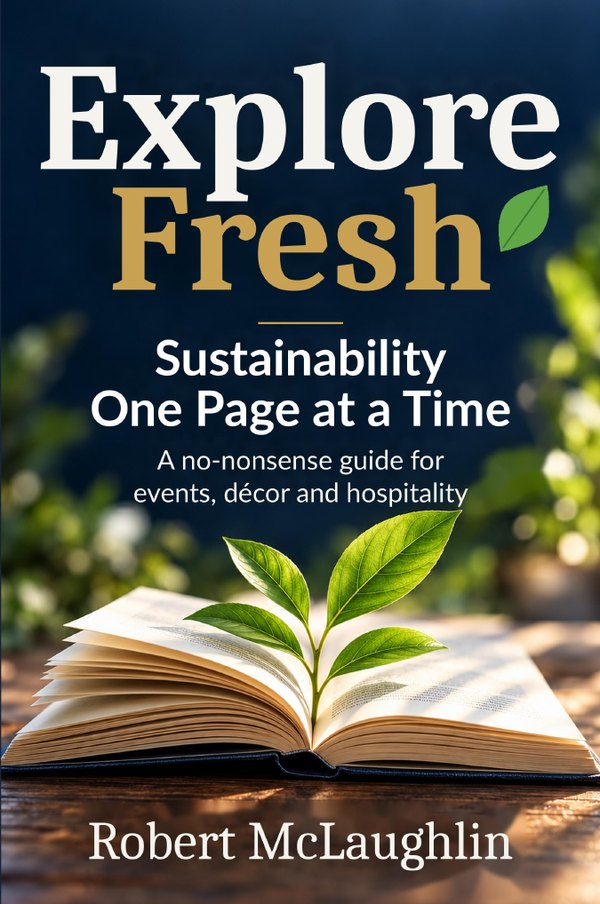
Sample chapters
Read a few pages.
Every chapter follows the same pattern: the point, a short explanation, something to do, and a check. Start with the first step and the three pillars, then read one of the darker stories most sustainability books leave out.
Chapter 1Sustainability is a journey.
The point. We will never be 100 percent sustainable. The choices we make still matter.
Sustainability is not a finish line. Nobody gets there. What we can do is take small steps in the right direction and keep taking them.
It matters for your business because customers are asking. It matters for your life because your footprint is the mark you leave on the planet and on the people around you.
I wrote this book so you can start, even if you have never done anything about it. No soapbox. No big spending. Just steps you can afford.
Do this.- Write down one thing you already do that helps the planet or the people around you.
- Write down one thing you would like to do.
- Tell one person.
Check. Can I name one step I will take this month?
Chapter 9The three pillars.
The point. Sustainability stands on three legs. Look at all three.
Most people think sustainability means the environment. It does, but that is one leg of a stool. The other two are people and money.
Environmental. Does it harm the planet less than the alternative?
Social. How are the people who make it and sell it treated? Who owns the business?
Economic. Is the supply chain ethical, and is the price fair for everyone it supports?
A product can be green and still be made by people who are treated badly. It can be cheap and hurt the planet. You need all three questions to see the whole picture.
Do this.- Write the three pillars on a card.
- Pin it where your buyers can see it.
- Read it before your next purchase.
Check. Can I name all three pillars without looking?
One of the stories to look forThe Darker Side of Sustainability
The book closes with stories from the road, the exceptions that taught Robert to go and look before he commits. “The cooler” is one of six. The others are waiting in the book:
- Doing good still has to pay
- Solar for good
- Bags that sent girls to school
- The farm in the desert
- When money fights the mission
From Part Twenty-Two: The Darker Side of Sustainability
Chapter 103The cooler.
The point. A certification tells you how a product was grown. It does not tell you how the people were treated.
I took over as managing director of a sustainability fund that had invested millions of dollars in USDA organic tomatoes in Mexico and organic vegetables in Florida, among other things. I visited those farms several times, because I wanted to know who the fund was invested in.
On one trip to a Florida vegetable farm I arrived early and waited for the owner. While I waited I noticed two things. The first was a DUI document on his desk, which on its own is nobody’s business. The second was a large walk-in cooler on the loading dock, shut down and unplugged. That is not unusual either. Produce is seasonal.
I put my head in the cooler and the smell was terrible: mold, mildew and something like body odor. I turned on the light on my phone. Wood pallets, flattened cardboard and blankets. Immigrant workers were sleeping there at night.
This farm was USDA certified organic. I checked. It grew the most beautiful tomatoes, beans and even organic strawberries, and it sold to the best organic grocery stores in the country.
Here is what I want you to take from that. Organic is a growing practice. It is not a sustainability standard. It describes how the product is grown, not how the people are treated. You can take an approved organic input, like concentrated fish emulsion, and spray it in a way that peels the skin off a worker. An organic farm can let runoff into a stream, feed a bloom of hydrilla that chokes the water, and harm wildlife and people upstream and down. None of that costs the farm its certificate.
So the certificate is where your questions start, not where they end. Knowing who you are working with, and how their values match yours, is a practice worth repeating every year.
Do this.- Pick your largest supplier. Write down which certifications they hold.
- For each one, write one sentence on what it actually checks. If you do not know, look it up.
- Write down what it does not check. That is your list of questions for the visit.
Check. Do I know what my suppliers’ certificates leave out?
Get the book on Amazon
 SUSTAINABLE EVENTS. CHOICES THAT MATTER.